Invoice Payment Terms Explained: Net 15, Net 30, Net 60 and More
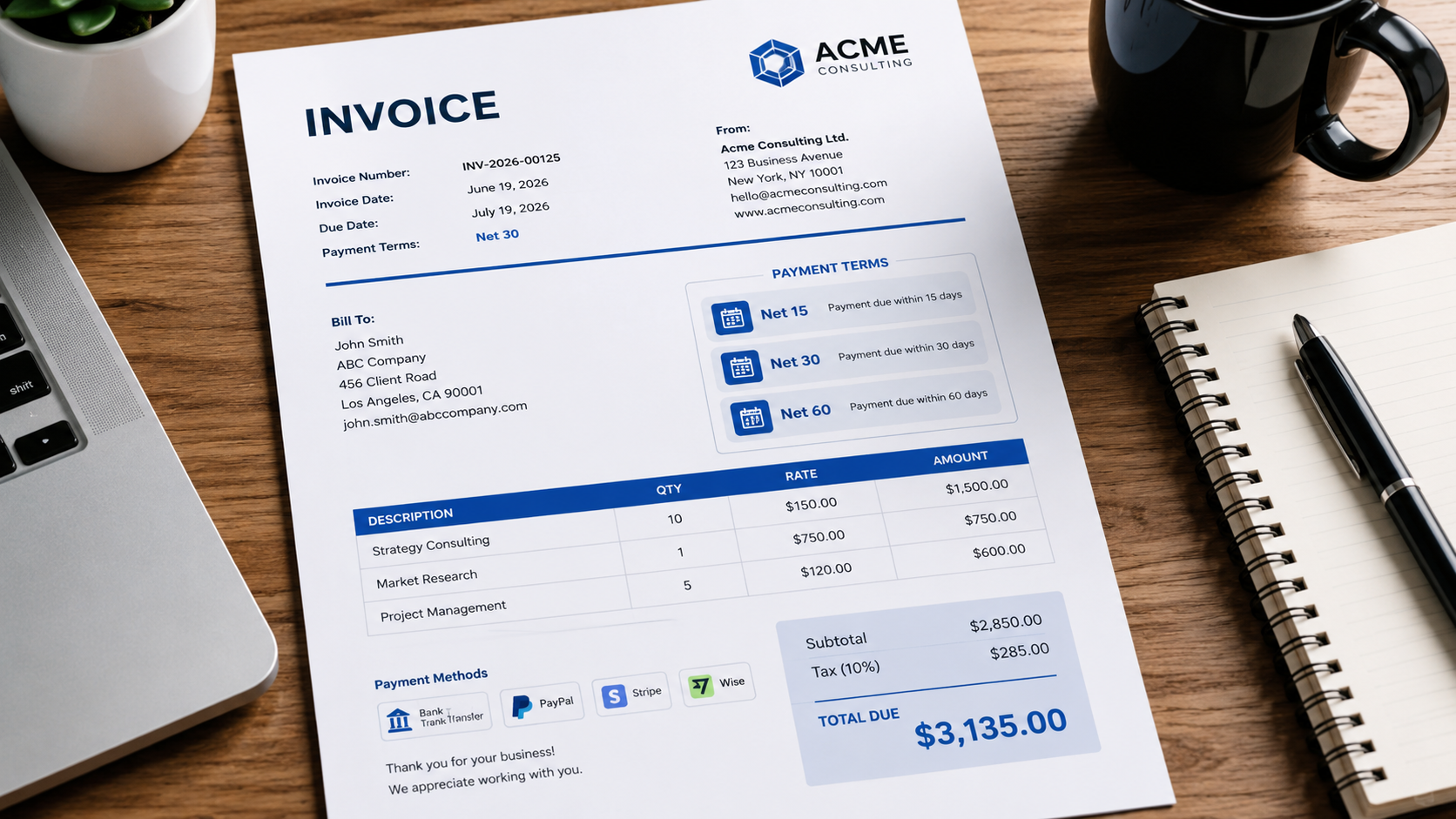
Invoice Payment Terms Explained: Net 15, Net 30, Net 60 and More
SEO Title: Invoice Payment Terms Explained: Net 15, Net 30, Net 60 and More
Meta Description: Learn what invoice payment terms like Net 15, Net 30, and Net 60 mean, when to use them, and how to get paid faster. Includes examples and best practices for small businesses and freelancers.
Simplify your billing with an professional invoice generator that helps you create invoices in seconds.
Excerpt: Confused by payment terms on invoices? Learn what Net 15, Net 30, Net 60, Due on Receipt, and other common invoice payment terms mean, with examples and best practices for getting paid on time.
Invoice Payment Terms Explained: Net 15, Net 30, Net 60 and More
Invoice payment terms tell your customer when payment is due and help set clear expectations between businesses and clients. Choosing the right payment terms can improve cash flow, reduce late payments, and make your invoicing process more professional.
In this guide, we'll explain the most common invoice payment terms, when to use them, and how to choose the best option for your business.
What Are Invoice Payment Terms?
Invoice payment terms specify how long a customer has to pay an invoice after receiving it.
For example, if an invoice is issued on June 1 with payment terms of Net 30, payment is due within 30 days, making the due date July 1.
Including payment terms on every invoice helps avoid confusion and provides a reference point if payment disputes arise later.
What Does Net 15 Mean?
Net 15 means payment is due within 15 days of the invoice date.
Example
Invoice Date: June 1
Payment Terms: Net 15
Due Date: June 16
Net 15 is commonly used by:
- Freelancers
- Consultants
- Agencies
- Small service businesses
It encourages faster payment while still giving clients reasonable time to process invoices.
What Does Net 30 Mean?
Net 30 means payment is due within 30 days of the invoice date.
Example
Invoice Date: June 1
Payment Terms: Net 30
Due Date: July 1
Net 30 is one of the most widely used payment terms in business because it balances client flexibility with predictable cash flow.
Common users include:
- B2B service providers
- Marketing agencies
- Software companies
- Professional service firms
What Does Net 60 Mean?
Net 60 means payment is due within 60 days of the invoice date.
Example
Invoice Date: June 1
Payment Terms: Net 60
Due Date: July 31
Large organizations sometimes require longer payment cycles due to internal approval processes.
However, small businesses should be cautious about offering Net 60 terms because it can negatively impact cash flow.
What Does Net 90 Mean?
Net 90 gives customers up to 90 days to pay an invoice.
While some large corporations operate on Net 90 terms, many freelancers and small businesses avoid these arrangements because waiting three months for payment can create financial strain.
If a client requests Net 90, consider negotiating a deposit or milestone payments.
What Does Due on Receipt Mean?
Due on Receipt means payment is expected immediately when the invoice is received.
This payment term is common for:
- Freelancers
- Contractors
- Small projects
- One-time services
While payment may not happen instantly, the expectation is that the client should process payment as soon as possible.
Common Payment Terms Comparison
| Payment Term | Payment Due |
|---|---|
| Due on Receipt | Immediately |
| Net 15 | Within 15 days |
| Net 30 | Within 30 days |
| Net 60 | Within 60 days |
| Net 90 | Within 90 days |
How to Choose the Right Payment Terms
The best payment terms depend on your business model, industry, and cash flow needs.
Choose Net 15 If:
- You are a freelancer or consultant
- Projects are relatively small
- You want faster payments
Choose Net 30 If:
- You work with established businesses
- Longer payment cycles are standard in your industry
- You want a balance between flexibility and cash flow
Consider Deposits If:
- Projects are large
- Work spans several months
- You are working with a new client
Many businesses require 25% to 50% upfront before beginning work.
How to Reduce Late Payments
Even with clear payment terms, some invoices may be paid late.
To improve payment speed:
- Include payment terms on every invoice
- Clearly display the due date
- Send invoices promptly
- Use professional invoice templates
- Send payment reminders before the due date
- Follow up quickly on overdue invoices
Clear communication often prevents payment delays before they occur.
Example Payment Terms Statement
You can include a statement such as:
"Payment is due within 30 days of the invoice date. Late payments may be subject to additional fees where permitted by law."
This provides clarity and establishes expectations from the start.
Final Thoughts
Invoice payment terms are more than just accounting jargon. They help businesses manage cash flow, establish professional expectations, and reduce payment disputes.
Whether you choose Due on Receipt, Net 15, Net 30, or another payment schedule, consistency is important. Make sure every invoice clearly states the payment terms and due date so your customers know exactly when payment is expected.
Need a professional invoice with clear payment terms? Create one in minutes using MyQuoteGenerator's free invoice generator.
Create professional invoices in seconds
Free invoice generator — no sign-up required
Create Free Invoice →