What Happens If an Invoice Is Paid Late? A Guide for Small Businesses
What Happens If an Invoice Is Paid Late? A Guide for Small Businesses
Sending an invoice doesn't always guarantee you'll be paid on time. Late payments are one of the most common challenges faced by freelancers, consultants, agencies, contractors, and small businesses.
While the occasional delayed payment may not seem like a major issue, repeated late payments can disrupt cash flow, create financial stress, and slow business growth.
For faster billing processes, consider using an online invoice generator to create polished invoices efficiently.
In this guide, we'll explain what happens when an invoice is paid late, how overdue invoices affect businesses, and what you can do to recover payment professionally.
What Is a Late Invoice?
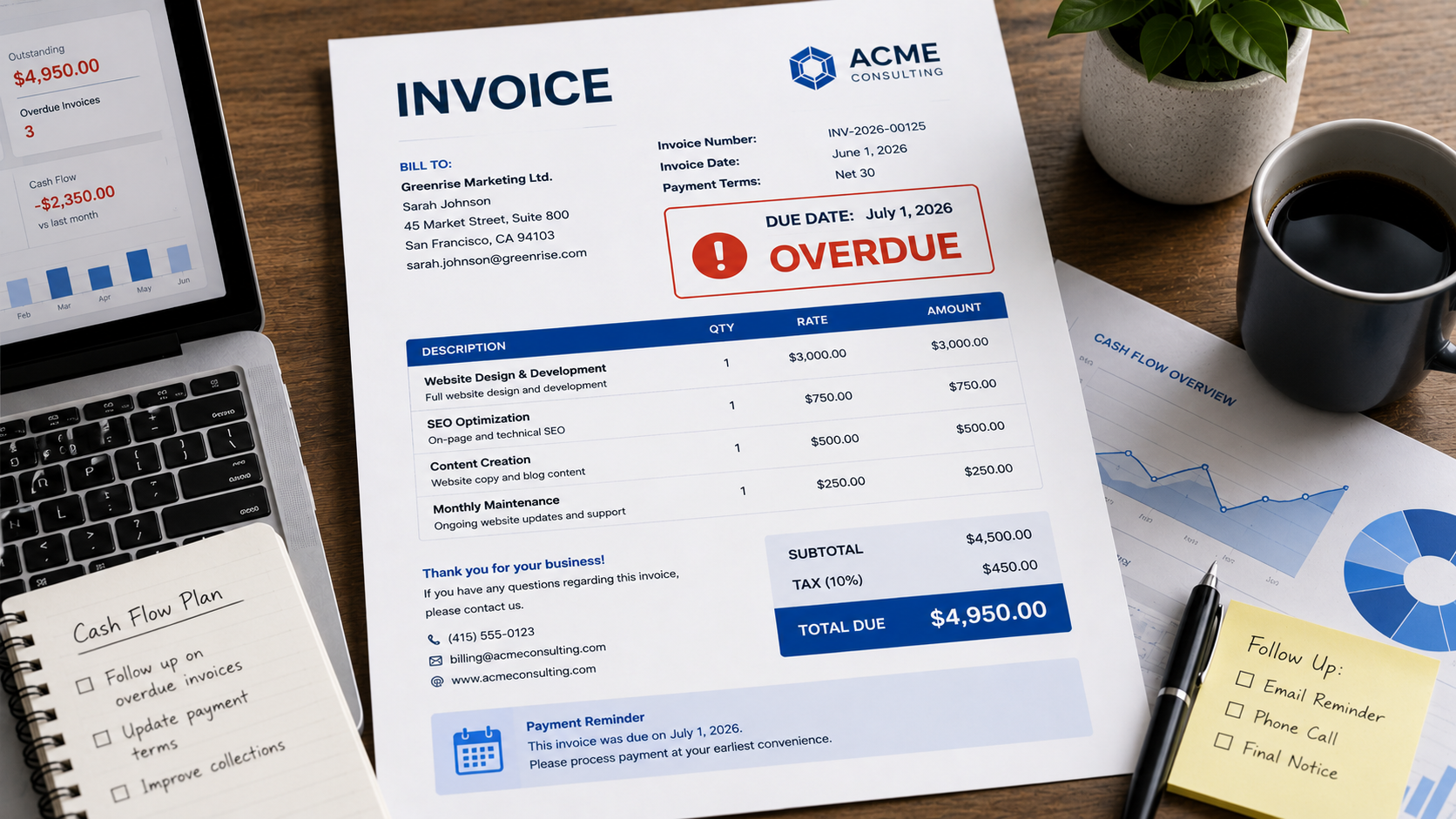
An invoice becomes late or overdue when payment has not been received by the due date stated on the invoice.
For example:
Invoice Date: June 1, 2026
Due Date: July 1, 2026
If payment has not been received by July 2, the invoice is considered overdue.
Why Late Payments Matter
Late payments affect more than just a single invoice.
They can impact:
- Business cash flow
- Payroll obligations
- Supplier payments
- Growth investments
- Financial planning
For freelancers and small businesses, a few overdue invoices can significantly affect monthly income.
Common Reasons Clients Pay Late
Late payments are not always intentional.
Common causes include:
Administrative Delays
Large organizations often have approval processes that slow payments.
Lost or Missed Invoices
Clients may overlook invoices in busy periods.
Cash Flow Problems
Some businesses delay payments because they are experiencing financial difficulties.
Unclear Payment Terms
If payment expectations were not clearly communicated, delays become more likely.
What Should You Do When an Invoice Is Overdue?
Step 1: Verify the Due Date
Before contacting the client, confirm:
- The invoice was sent
- The due date has passed
- Payment has not already been made
Mistakes happen, so always verify first.
Step 2: Send a Friendly Reminder
Many overdue invoices can be resolved with a simple reminder.
Example:
"Just a friendly reminder that Invoice INV-2026-001 became due on July 1. Please let us know if payment has already been processed."
Remain professional and polite.
Step 3: Follow Up Promptly
Do not wait months before following up.
A common schedule is:
- Reminder 3–7 days after due date
- Second reminder after 14 days
- Final reminder after 30 days
Consistent follow-up improves collection rates.
Step 4: Contact the Client Directly
If email reminders are ignored, consider:
- Phone calls
- Video meetings
- Direct communication with the accounts department
Many payment issues can be resolved through conversation.
Should You Charge Late Fees?
Some businesses include late payment fees in their terms and conditions.
For example:
"A late fee of 2% per month may be applied to overdue balances."
Always check local laws and regulations before charging late fees.
If you plan to charge penalties, clearly state them before work begins.
When Should You Stop Work?
For ongoing projects, many businesses pause work when invoices become significantly overdue.
This protects your business from:
- Increasing unpaid balances
- Additional financial risk
- Extended payment disputes
Clear payment policies help avoid uncomfortable situations later.
How to Prevent Late Payments
The best solution is prevention.
Use Clear Payment Terms
State:
- Due date
- Payment schedule
- Accepted payment methods
Send Invoices Immediately
The sooner invoices are issued, the sooner payment can begin processing.
Require Deposits
For larger projects, request an upfront deposit before starting work.
Use Professional Invoices
Professional documents build trust and reduce misunderstandings.
Send Automatic Reminders
Reminder emails often recover payments before invoices become seriously overdue.
What Happens If Payment Never Arrives?
In rare situations, clients may refuse or fail to pay entirely.
Possible next steps include:
- Formal demand letters
- Collection agencies
- Mediation
- Legal action
These options should generally be considered only after reasonable attempts to resolve the issue directly.
Final Thoughts
Late payments are a reality of doing business, but they don't have to become a crisis. Clear payment terms, prompt invoicing, and professional follow-up procedures can significantly reduce overdue accounts.
The key is to remain professional, communicate consistently, and address payment issues early before they become larger problems.
Need professional invoices with clear due dates and payment terms? Create them in minutes using MyQuoteGenerator's free invoice generator.
Create professional invoices in seconds
Free invoice generator — no sign-up required
Create Free Invoice →